
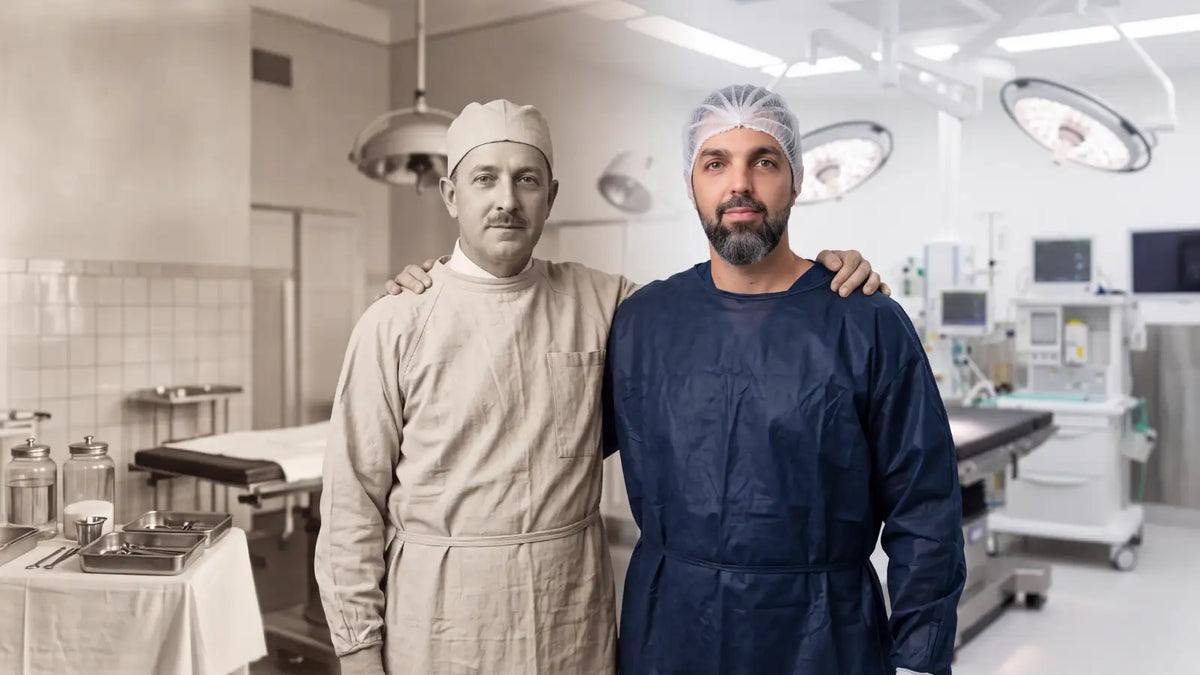
Surgical education has always required the transfer of more than factual knowledge. A learner must recognize anatomy, understand the purpose of each maneuver, coordinate instruments and make decisions within an appropriately supervised clinical environment.
For much of surgical history, access to that learning depended on physical presence and opportunity. A trainee had to be beside the right surgeon, during the right case, with a view of the operative field that made the critical steps visible.
Structured residency changed that model. Digital education is changing it again - not by replacing the operating room, but by making observation, preparation and review more repeatable.
Before structured residency, learning depended on proximity
Before formal residency programs, surgical education was largely based on apprenticeship. Learners followed experienced surgeons, observed procedures, assisted when permitted and gradually assumed more responsibility.
This model produced generations of capable surgeons, but it was inherently dependent on opportunity. The cases available to one trainee could differ substantially from those available to another. A common operation might be observed repeatedly, while a less frequent procedure might appear only once during an entire period of training.
Visibility was another limitation. Being present in the operating room did not guarantee that the learner could see what the primary surgeon saw. Hands, instruments, assistants, lighting and the depth of the operative field could obscure the most important part of a maneuver.
What Halsted changed
In the late nineteenth century, William Stewart Halsted helped establish the foundations of structured surgical residency at Johns Hopkins. His model emphasized intensive clinical immersion, progressive responsibility and increasing operative experience over time.
The familiar phrase see one, do one, teach one later became a popular summary of the apprenticeship logic associated with surgical training. It should not be treated as a literal description of Halsted's complete educational system, but it captures a durable progression: observe, perform under supervision and eventually consolidate knowledge by teaching.
Halsted's contribution was transformative because exposure became organized rather than accidental. Training gained structure, continuity and progressive responsibility.
Structured exposure did not eliminate variability
Formal residency improved access to clinical experience, but it did not make that experience identical for every learner.
Two physicians completing the same program may encounter different procedures, anatomical variations, complications and technical challenges. Real operative experience remains essential, yet it cannot be reproduced on demand.
A textbook can be reopened. A lecture can be replayed. A completed operation cannot be repeated simply because a learner wants another opportunity to study the exposure, instrument trajectory or decision point.
This is the educational gap that digital surgical content can help address.
Digital observation makes a procedure revisitable
Surgical photography, recorded lectures, operative video and online education expanded access beyond the physical limits of one operating room.
A recorded procedure can be paused, replayed and reviewed with a different objective during each session. One viewing may focus on anatomy. Another may focus on operative sequence, tissue handling, hand coordination, imaging or decision points.
Research on video-based coaching and mental practice suggests that structured review can support technical learning when it is combined with clear objectives, feedback and supervised training. The evidence does not justify treating video as a substitute for clinical experience, but it supports its role as an educational adjunct.
From external video to surgeon POV
Conventional surgical video often documents the operation from an external camera. This perspective can be valuable for understanding patient positioning, team organization, ergonomics and the broader context of the procedure.
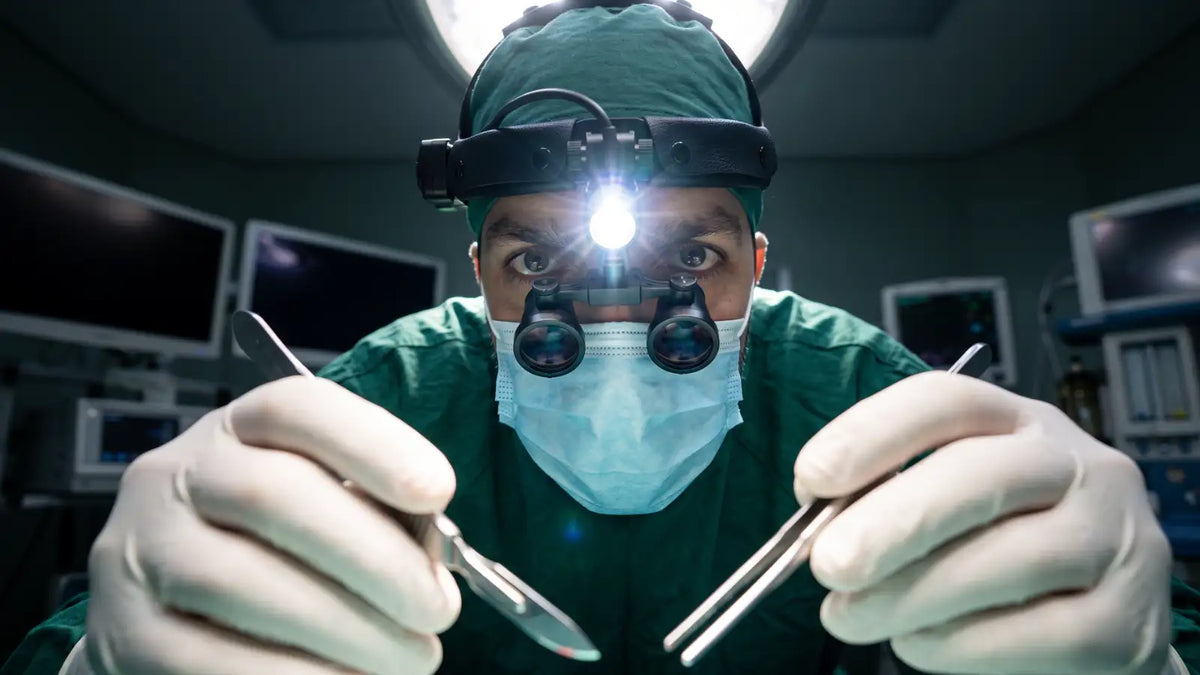
Surgeon point-of-view video provides a different layer of information. When the camera is aligned close to the operator's line of sight, the learner can observe the operative field from a perspective that more closely follows the surgeon's visual orientation.
The shift is not simply from a distant image to a closer image. It is a shift from watching the surgeon to studying the relationship between what the surgeon sees, where the instruments are directed and how the next action is selected.
Expert narration helps make tacit reasoning visible
A clear image can show what happened. Expert narration can help explain why it happened.
During an operation, many decisions are not obvious from movement alone:
- why a particular approach was selected;
- which anatomical landmark organizes the next step;
- why traction is applied in a specific direction;
- which structure is at risk;
- when an alternative strategy should be considered;
- how the surgeon evaluates the result of a maneuver.
When surgeon POV is combined with structured technical narration, the learner can study three connected layers: what the surgeon sees, what the surgeon does and why the surgeon makes each decision.
From a three-step adage to a continuous learning cycle
The classic progression remains relevant, but contemporary surgical education can extend it into a continuous cycle:
Observe -> Understand -> Repeat -> Mentally rehearse -> Perform under supervision -> Review -> Refine
Before a case, the learner can review the clinical problem, anatomy, sequence and critical decisions.
During supervised participation, that mental representation is tested against clinical reality.
After the case, the learner can return to the expert procedure, identify gaps and refine the model for the next opportunity.
This approach turns the operation from an isolated educational event into part of a repeatable learning loop. For a practical method, read How to Study Surgical Videos Before Entering the Operating Room.
What does not change
Digital education does not remove the need for formal training, mentorship, simulation, cadaveric learning when appropriate, professional credentialing or supervised operative experience.
The operating room remains indispensable.
The mentor remains indispensable.
Supervised progression remains indispensable.
What changes is the quality of preparation before the learner enters the operating room and the ability to review the procedure after the clinical opportunity has ended.
How Surgie supports this model
Surgie is designed around real procedures, surgeon-led explanations and repeatable access to operative content.
The platform brings together:
- complete clinical cases;
- surgeon POV recordings;
- structured technical narration;
- operative anatomy and procedural sequencing;
- expert decision-making;
- multilingual audio and subtitles on supported content;
- free procedures and previews of selected paid cases.
The purpose is not to replace surgical experience. It is to help qualified healthcare professionals arrive at supervised learning opportunities better prepared.
Explore real surgical procedures and surgeon-led operative training on Surgie.
Educational notice: Surgie content supports professional education and preparation. It does not establish competence, authorize independent practice or replace formal medical education, professional judgment, credentialing, institutional protocols or appropriately supervised clinical training.
Evidence and further reading
- Johns Hopkins Medicine: History of the Department of Surgery
- Kotsis SV, Chung KC. Application of the "see one, do one, teach one" concept in surgical training.
- Augestad KM et al. Video-based coaching in surgical education: a systematic review and meta-analysis.
- Rao A et al. Mental training as a supplementary tool in surgical skills learning.


Leave a comment
This site is protected by hCaptcha and the hCaptcha Privacy Policy and Terms of Service apply.