
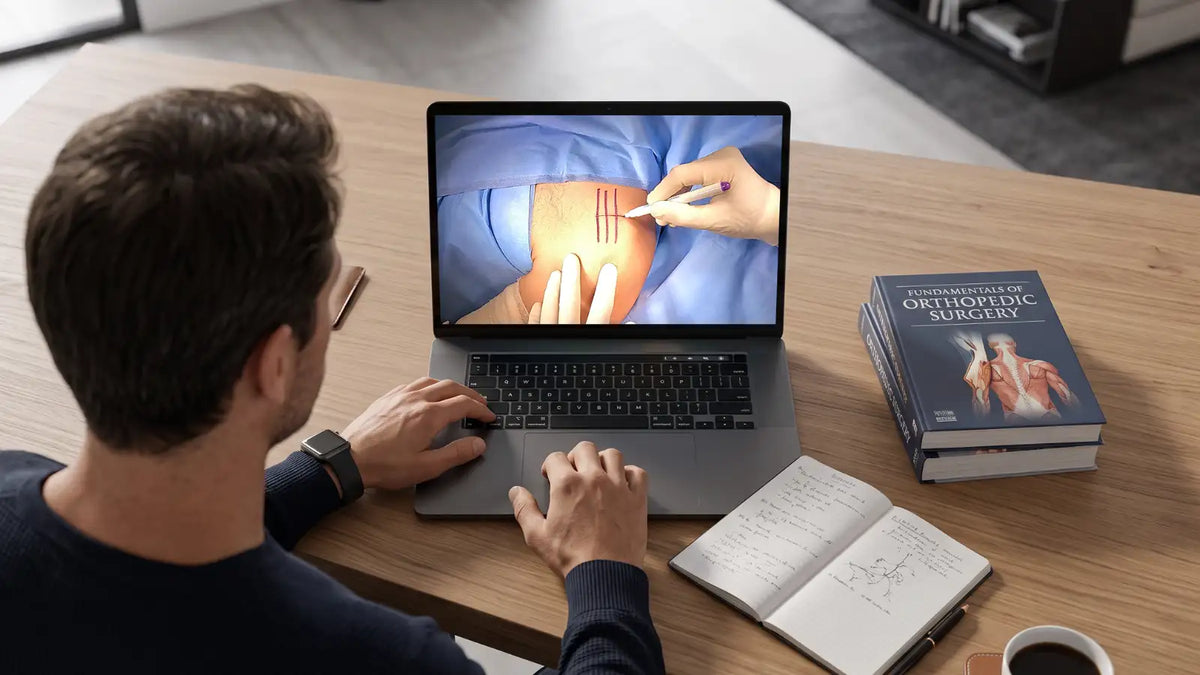
La experiencia clínica es esencial para la formación quirúrgica, pero los casos clínicos no pueden reproducirse a demanda.
Un médico puede enfrentarse a un procedimiento poco familiar, observarlo con atención y luego esperar semanas o meses antes de ver un caso comparable nuevamente. Para las operaciones menos frecuentes, el intervalo puede ser mucho más largo.
El contenido quirúrgico digital no puede sustituir al paciente, al mentor o la participación supervisada. Sin embargo, puede hacer que el tiempo entre las oportunidades clínicas resulte más productivo desde el punto de vista educativo.
La experiencia quirúrgica es esencial, pero es inherentemente variable
El aprendizaje quirúrgico tradicional depende en gran medida de la exposición acumulada. Más casos generalmente crean más oportunidades para reconocer la anatomía, comprender la secuencia del procedimiento y refinar el juicio técnico.
La limitación es que la exposición requiere un paciente, una indicación, un quirófano, un equipo cualificado y el momento adecuado en la progresión del aprendiz.
Dos médicos en el mismo programa de formación pueden completar mezclas de casos diferentes. Pueden encontrarse con diferentes variaciones anatómicas, complicaciones y decisiones operatorias.
Esta variabilidad no es un fracaso de la formación. Es una característica de la práctica clínica real.
El desafío educativo es preservar el valor de la experiencia real al tiempo que se crean formas más estructuradas de prepararse antes de un caso y revisarlo después.
La repetición no es lo mismo que la reproducción pasiva
Ver el mismo video quirúrgico varias veces no crea automáticamente una práctica deliberada.
La práctica deliberada suele asociarse con objetivos claros, tareas enfocadas, retroalimentación y refinamiento repetido. La revisión de video puede ser un componente de ese proceso, pero no es el proceso completo por sí mismo.
Un término más preciso para el estudio repetido y orientado a objetivos de contenido operatorio es repetición deliberada.
La diferencia es sencilla:
- Repetición pasiva: observar el procedimiento nuevamente sin una pregunta definida.
- Repetición deliberada: volver al mismo procedimiento con un objetivo específico, evaluando la retención, identificando lagunas y conectando la revisión con la retroalimentación o la experiencia supervisada.
La repetición se vuelve más efectiva desde el punto de vista educativo cuando cada visualización tiene un propósito.
Qué puede ayudar a construir la repetición enfocada
La relación de un aprendiz con un procedimiento a menudo progresa a través de etapas reconocibles:
He visto esta operación.
Reconozco la secuencia principal.
Puedo explicar por qué ocurren los pasos importantes.
Puedo anticipar qué debería suceder a continuación.
La anticipación no implica competencia independiente.Significa que el aprendiz ha desarrollado una representación mental más organizada del procedimiento.
Esa representación puede incluir:
- el objetivo clínico;
- la posición del paciente;
- el abordaje quirúrgico;
- los puntos de referencia anatómicos clave;
- las fases operatorias principales;
- las trayectorias de los instrumentos;
- los puntos de decisión;
- las estructuras en riesgo;
- el resultado esperado de cada maniobra.
Un modelo mental más sólido puede ayudar al aprendiz a seguir un caso supervisado de manera más activa y reconocer dónde se necesita instrucción adicional.
Un ciclo de aprendizaje práctico entre casos
1. Defina una pregunta antes de pulsar reproducir
No comience con el objetivo vago de "estudiar la operación". Elija una pregunta específica.
Los ejemplos incluyen:
- ¿Qué puntos de referencia organizan la exposición?
- ¿Cómo se aplica la tracción durante el paso crítico?
- ¿Dónde entra el instrumento en el campo?
- ¿Qué vista de imagen confirma la siguiente decisión?
- ¿Qué cambia cuando la anatomía difiere del patrón esperado?
2. Ver una vez para el flujo completo
La primera visualización debe establecer la estructura general del procedimiento.
Identifique la transición del contexto clínico al posicionamiento, exposición, reconstrucción o fijación, verificación y cierre. No se detenga en cada detalle durante esta primera pasada.
3.Repita con un enfoque diferente
Utilice las visualizaciones posteriores para estudiar una capa a la vez:
- anatomía y exposición;
- secuencia operatoria;
- coordinación manual;
- dirección del instrumento;
- puntos de decisión;
- estructuras de riesgo;
- uso de fluoroscopia, endoscopia u otras modalidades de imagen.
Esto es más efectivo que intentar procesar todas las capas simultáneamente.
4. Cierre el video y reconstruya el procedimiento
Después de una revisión enfocada, elimine la referencia visual.
Ensaye mentalmente el procedimiento desde el posicionamiento hasta el cierre. Intente nombrar el siguiente paso antes de avanzar. Cuando la secuencia se vuelva poco clara, se habrá identificado una brecha de conocimiento.
Regrese específicamente a esa sección en lugar de reiniciar el video completo sin un plan.
5.Agregar retroalimentación
La revisión autodirigida es valiosa, pero la retroalimentación mejora la calidad del ciclo de aprendizaje.
Discuta las incertidumbres con un mentor calificado, compare la grabación con los protocolos institucionales y relacione la técnica observada con el nivel actual de responsabilidad del aprendiz.
Cuando esté disponible, el coaching basado en video puede ayudar a identificar detalles técnicos o cognitivos que el aprendiz no pueda reconocer de forma independiente.
6. Regrese después de la participación clínica supervisada
El mismo video a menudo revela nueva información después de que el aprendiz haya asistido o realizado parte de un caso comparable bajo supervisión.
Los movimientos que anteriormente parecían simples pueden adquirir más significado. La exposición puede parecer más compleja. Un punto de decisión puede resultar más fácil de reconocer.
La revisión post-caso cierra el ciclo:
Observar -> Comprender -> Repetir -> Ensayar mentalmente -> Realizar bajo supervisión -> Revisar -> Refinar
Para un marco de visualización más detallado, lea Cómo estudiar videos quirúrgicos antes de entrar al quirófano.
Utilice el intervalo entre casos como preparación estructurada
El tiempo entre dos procedimientos comparables puede ser de semanas, meses o más. Sin un proceso estructurado, ese intervalo se convierte en tiempo de espera.
Con repetición deliberada, puede convertirse en tiempo de preparación.
Un registro de estudio práctico puede incluir:
- el procedimiento revisado;
- el objetivo de aprendizaje para cada visualización;
- preguntas anatómicas o técnicas;
- pasos que no se pudieron recordar sin el video;
- retroalimentación recibida de un mentor;
- observaciones realizadas después de un caso supervisado.
El objetivo no es memorizar un guion rígido. Las operaciones reales varían, y las decisiones específicas del paciente siguen siendo esenciales. El objetivo es construir una referencia organizada que ayude al aprendiz a reconocer el procedimiento, comprender las alternativas y hacer mejores preguntas.
Lo que la evidencia respalda - y lo que no
La investigación sobre el coaching basado en video y la práctica mental sugiere que estos métodos pueden apoyar el rendimiento técnico y el aprendizaje procedimental. Sin embargo, los estudios difieren en el diseño, el nivel del aprendiz, el procedimiento y la medición de resultados.
La conclusión responsable es que la revisión estructurada de videos y el ensayo mental pueden ser herramientas suplementarias útiles.
La evidencia no respalda las afirmaciones de que el video por sí solo:
- garantiza la competencia;
- elimina la curva de aprendizaje quirúrgica;
- reemplaza la retroalimentación directa;
- autoriza el desempeño independiente;
- mejora los resultados para los pacientes sin evidencia específica del procedimiento.
La preparación debe mejorarse sin reducir los estándares requeridos para la progresión supervisada y la competencia profesional.
Cómo Surgie apoya la repetición deliberada
La plataforma está diseñada para ayudar a los médicos:
- revisar un caso completo antes de la participación supervisada;
- volver a un paso operatorio crítico;
- estudiar la anatomía, la secuencia y las trayectorias de los instrumentos por separado;
- comparar enfoques de cirujanos experimentados;
- revisitar el procedimiento después de una experiencia clínica;
- utilizar audio multilingüe y subtítulos en el contenido compatible.
El
El principio central es sencillo:
No se puede reemplazar la experiencia quirúrgica, pero se puede llegar a cada experiencia supervisada mejor preparado.
Aviso educativo:
Evidencia y lecturas adicionales
- Augestad KM et al. Coaching basado en video en la educación quirúrgica: una revisión sistemática y metaanálisis.
- Rao A et al. Revisión sistemática y metaanálisis del entrenamiento mental en habilidades quirúrgicas.
- Arora S et al. La práctica mental mejora las habilidades técnicas quirúrgicas.
- Youssef SC et al. Aprendizaje de habilidades quirúrgicas a través de la educación basada en video.
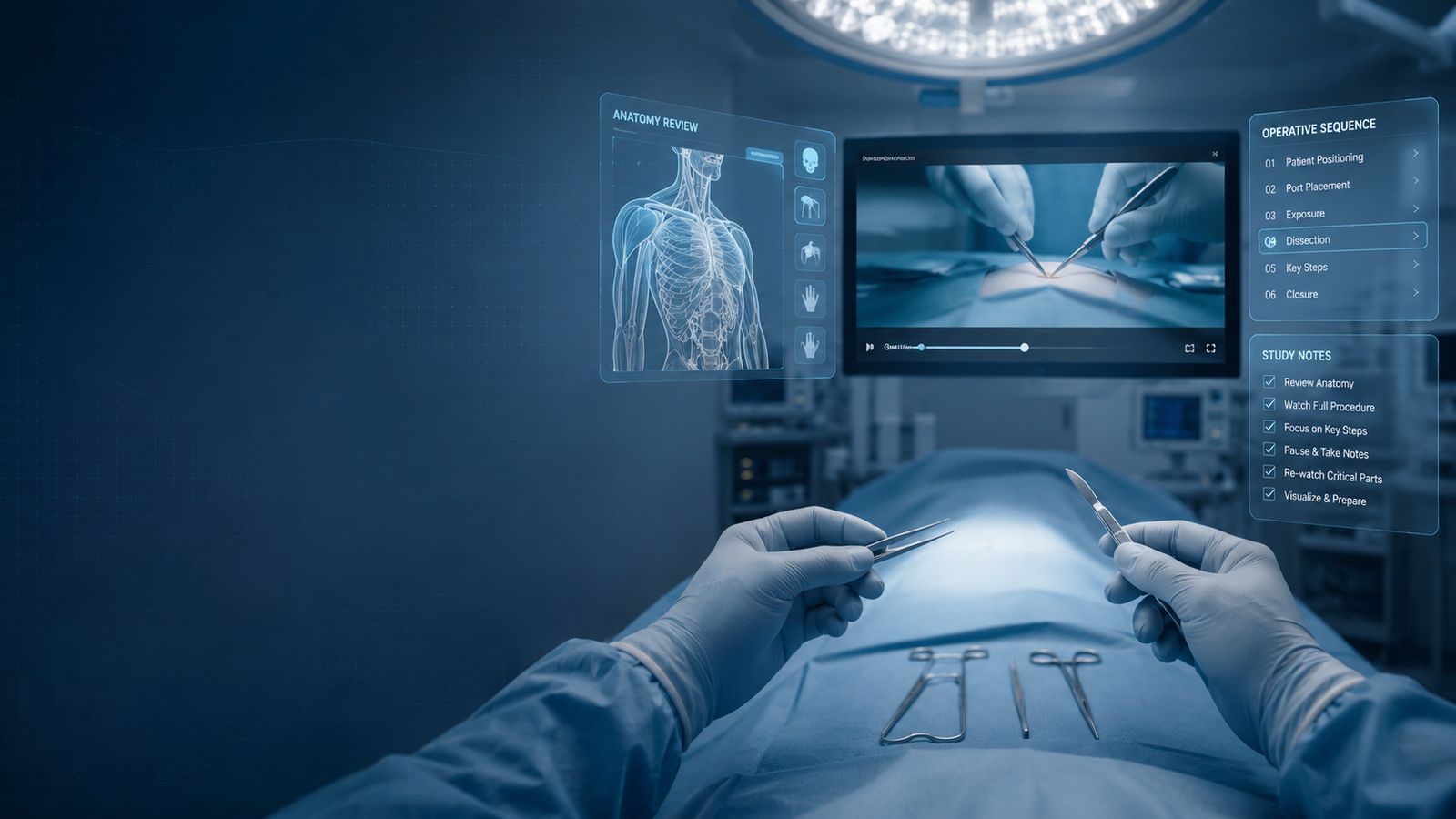

Dejar un comentario
Este sitio está protegido por hCaptcha y se aplican la Política de privacidad de hCaptcha y los Términos del servicio.